
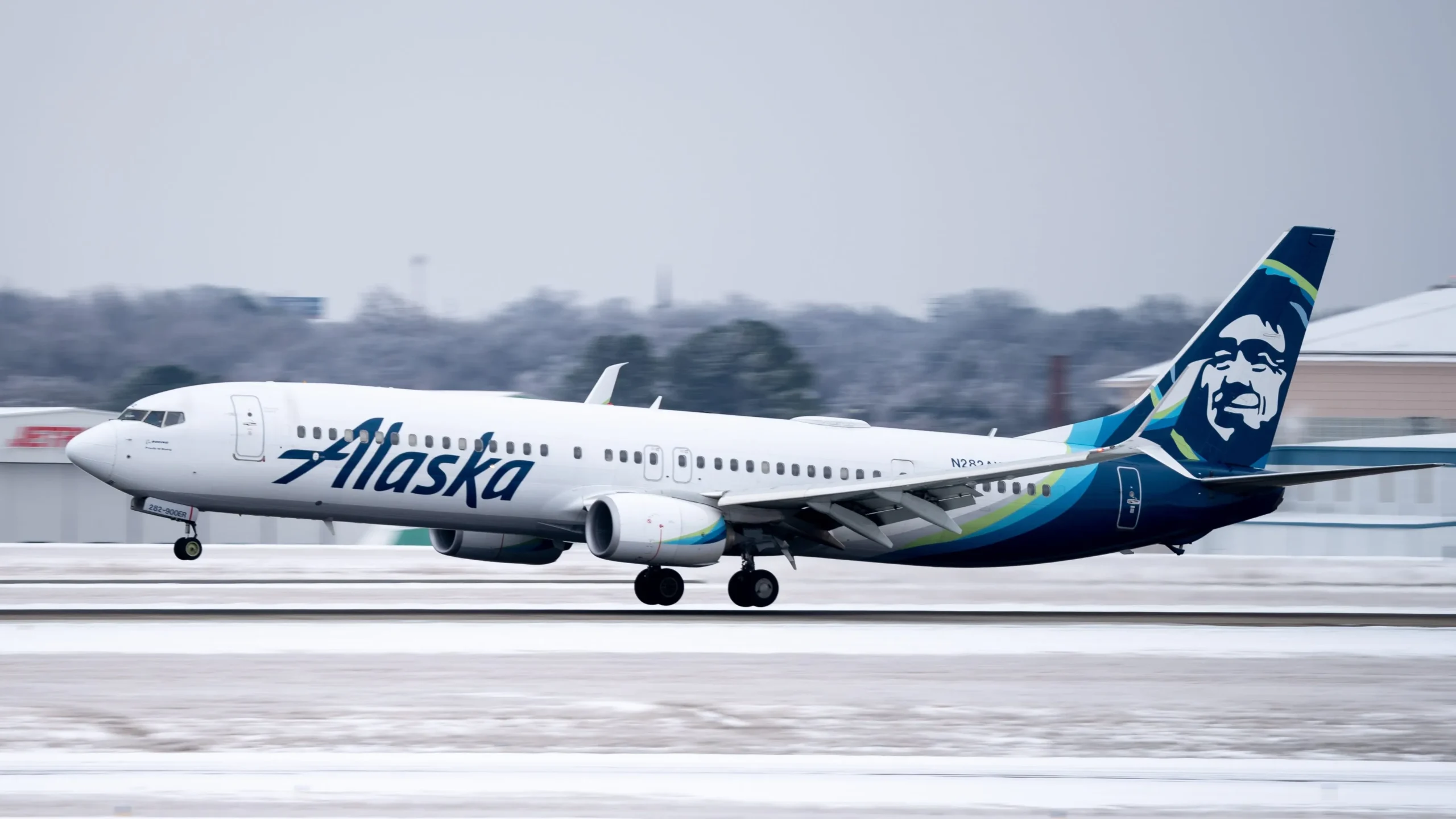
When travelers first noticed Alaska Airlines flying internationally from St. Louis, many were confused. Alaska Airlines is known for its strong West Coast network, with major hubs in Seattle and Anchorage. St. Louis does not fit that image at all. Yet, the airline’s seasonal flight from St. Louis to Mexico is not as strange as it seems.
Once you look at demand patterns and airline strategy, the decision becomes surprisingly logical.
A Seasonal Demand Problem
Alaska Airlines faces a common challenge every winter. Travel demand in the Pacific Northwest drops sharply once summer ends. Fewer tourists visit Alaska and nearby regions, and business travel also slows down. This leaves aircraft sitting idle or flying with fewer passengers.
Instead of accepting heavy losses, the airline looks for markets where winter demand rises. Warm-weather destinations, especially in Mexico, attract US travelers looking to escape cold temperatures. This shift in demand creates an opportunity.
Why St. Louis Was Chosen
St. Louis may not be a hub, but it has a solid base of leisure travelers. The city is already used to vacation-focused flights, mainly due to strong competition from low-cost airlines. Alaska Airlines stepped into this market with a seasonal flight from St. Louis Lambert International Airport to Puerto Vallarta.
The route operates only once a week, usually on Saturdays. This limited schedule reduces risk and keeps operating costs under control. The airline uses the Boeing 737 MAX 9, which offers enough capacity without overcommitting resources.
The Power of Guaranteed Bookings
One of the biggest reasons this route works is Alaska Airlines’ partnership with Apple Vacations. A large number of seats on each flight are booked in advance by the travel company as part of vacation packages.
This means the airline earns guaranteed revenue before the flight even departs. Any additional seats sold directly to passengers become extra profit. During the slow winter season, this kind of certainty is valuable for an airline.
How This Strategy Compares
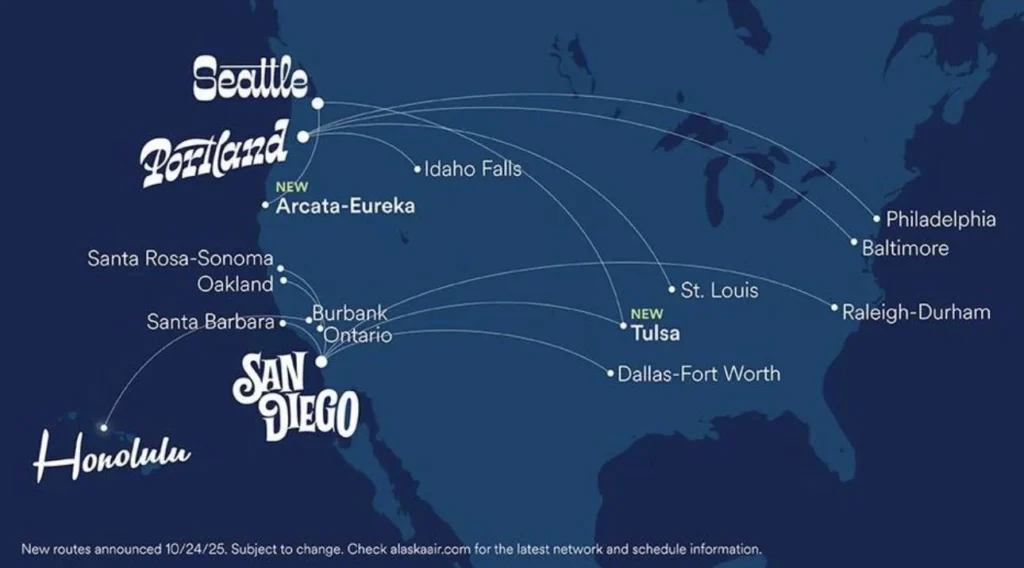
Here is a simple comparison showing why this seasonal route makes sense:
| Factor | Seasonal St. Louis Route | Traditional Hub Route |
|---|---|---|
| Frequency | Once per week | Daily flights |
| Demand Risk | Low due to bulk bookings | Higher in winter |
| Aircraft Use | Efficient in low season | Often underused |
| Target Travelers | Leisure vacationers | Mixed travel demand |
This approach allows Alaska Airlines to keep planes flying and earning money when its main markets are quiet.
Competition and Market Reality
St. Louis is dominated by Southwest Airlines, which already connects the city to several vacation destinations. Alaska Airlines is not trying to challenge that dominance. Instead, it focuses on a narrow, seasonal window where demand is predictable.
The airline also keeps its presence limited, avoiding long-term commitments that could turn risky if demand changes.
Final Takeaway
Alaska Airlines’ St. Louis international route may look unusual on a route map, but it is built on careful planning. Seasonal demand, guaranteed bookings, and low-frequency operations turn a slow winter period into a steady source of income.
What seems like an odd choice is actually a smart, low-risk move that fits perfectly into Alaska Airlines’ broader strategy.