
SpaceX has taken another confident step in human space exploration with the successful launch of its Crew-12 mission to the International Space Station. The launch, carried out in the early hours from Florida, sent four astronauts into orbit for an extended eight-month science mission. This event highlights how space research is entering a more stable and advanced phase.
A Smooth and Powerful Liftoff
The Crew-12 mission launched aboard a Falcon 9 rocket from Cape Canaveral Space Force Station. The rocket carried the Crew Dragon spacecraft, named Freedom, which has been designed for autonomous operations and long-duration missions. As the engines ignited, the rocket rose into the pre-dawn sky, marking another clean and controlled launch for SpaceX.
Within minutes, the spacecraft reached orbital speed. Shortly after separation, the reusable booster returned safely to Earth, landing back at the launch site. This successful recovery once again showed how reusable rocket technology is changing the economics of space travel.
Meet the International Crew
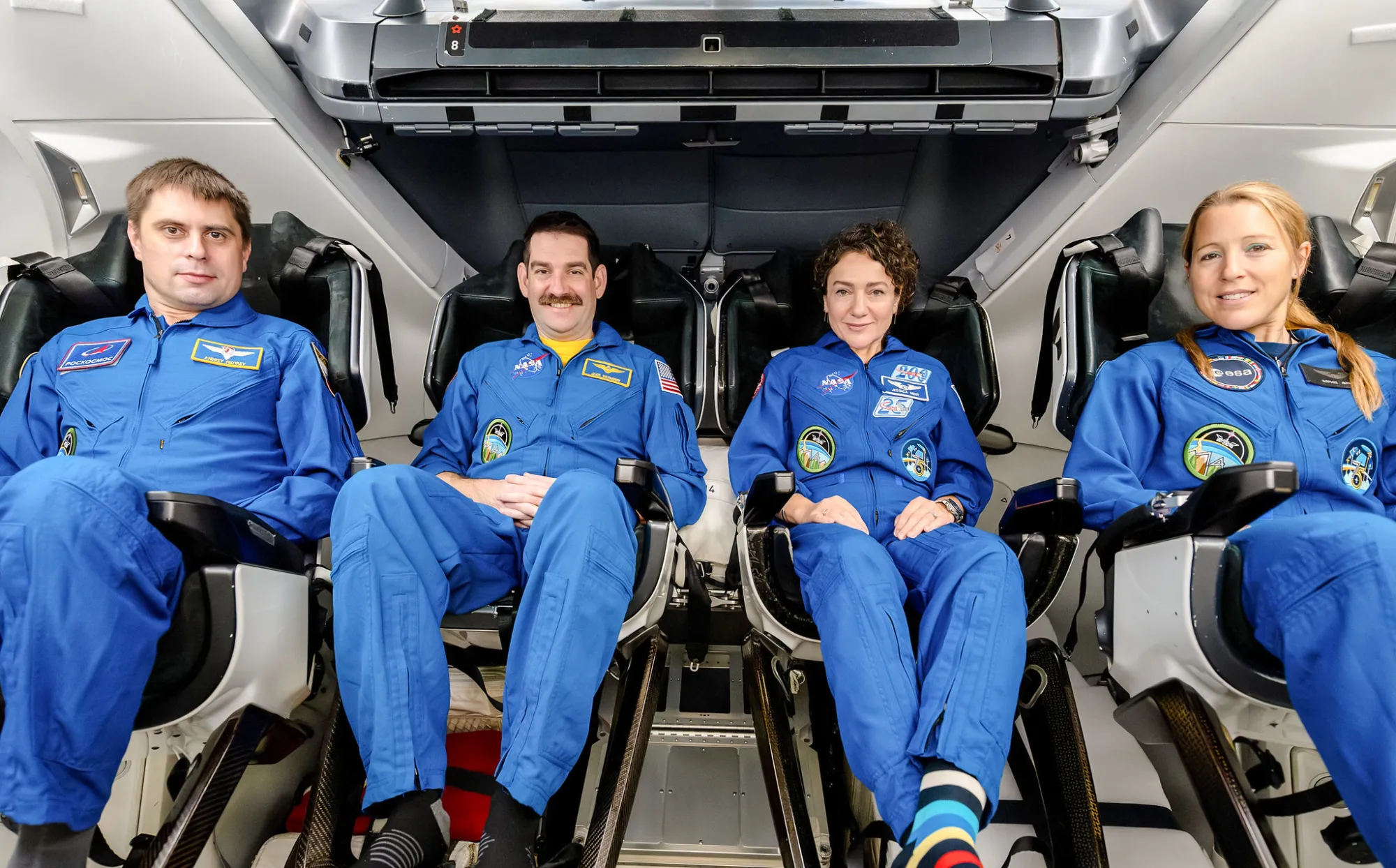
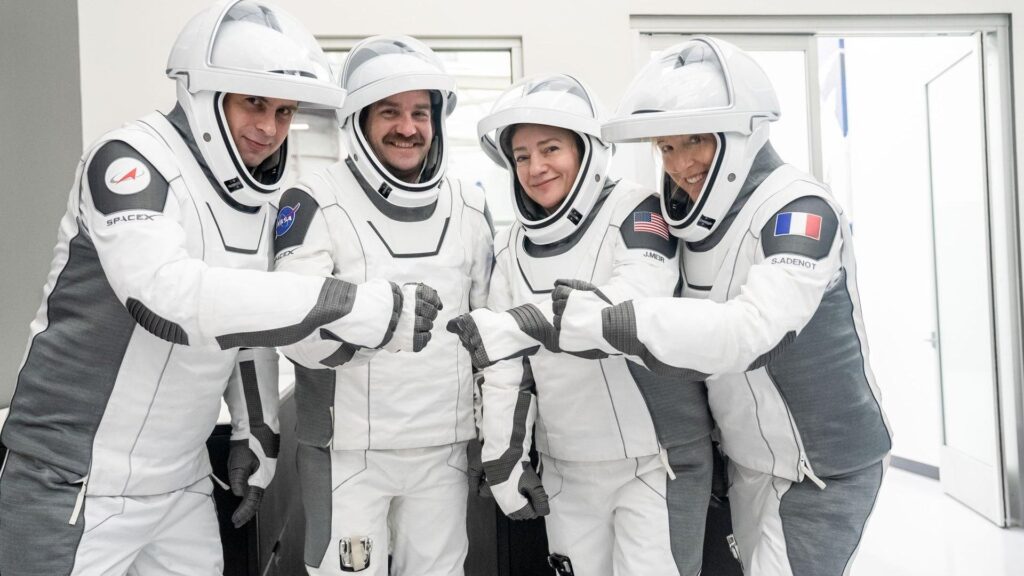
Crew-12 is commanded by NASA astronaut Jessica Meir, a seasoned astronaut and marine biologist on her second visit to the space station. She is joined by Jack Hathaway, a former U.S. Navy fighter pilot making his first spaceflight. Also onboard are European Space Agency astronaut Sophie Adenot from France and Russian cosmonaut Andrey Fedyaev, who is on his second mission to the ISS.
This mix of American, European, and Russian crew members reflects the long-standing international partnership that keeps the space station running smoothly.
Mission Goals and Research Focus
After a 34-hour journey, the Crew-12 team will dock with the space station and begin months of scientific work in microgravity. Their research includes studying bacteria linked to pneumonia, which may lead to better treatments on Earth. The crew will also conduct experiments on plant growth and soil microbes, helping scientists understand how food can be grown during long space missions.
Many of these experiments support future exploration plans under NASA’s Artemis program, which aims to send humans back to the Moon and later to Mars.
Crew-12 Compared to Earlier ISS Missions
| Mission Aspect | Crew-12 | Earlier Missions |
|---|---|---|
| Mission Length | 8 months | About 6 months |
| Launch Vehicle | Falcon 9 (Reusable) | Mostly expendable rockets |
| Spacecraft | Crew Dragon Freedom | Soyuz / earlier capsules |
| Crew Makeup | Multi-national | Often single-agency |
This comparison shows how ISS missions are becoming longer, more efficient, and more globally connected.
Why Crew-12 Matters
Crew-12 marks the 12th long-duration ISS mission launched by SpaceX since 2020. It proves that commercial spaceflight has matured into a reliable system for transporting astronauts. The International Space Station, which has been continuously occupied for over two decades, remains a critical platform for research and cooperation.
NASA has confirmed plans to operate the station until 2030, ensuring that missions like Crew-12 will continue to expand our understanding of space and life beyond Earth. Inside this launch lies a clear message: space research is no longer experimental, it is becoming routine, reliable, and ready for the next giant leap.