Meta Description: A deep look into the Notepad++ supply chain attack linked to China, how it happened, who was targeted, and what it means for software security.
Introduction
In December 2025, a serious supply chain security incident involving Notepad++ shocked the cybersecurity community. Notepad++ is a widely used free source code editor trusted by developers and organizations worldwide. The attack was not caused by a flaw in the software itself, but by a compromise at the hosting provider level. Recent findings suggest that the operation was likely carried out by a state-sponsored group linked to China, with a focus on highly selective targets.
What Happened in the Notepad++ Supply Chain Attack
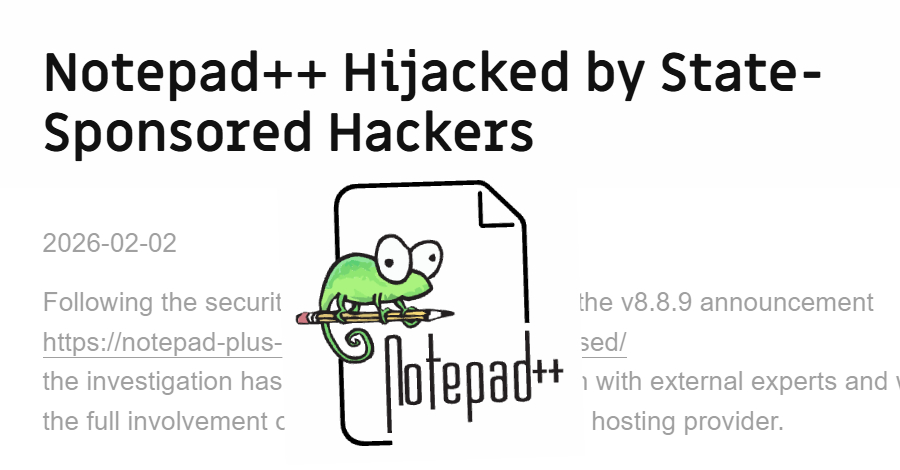
The issue came to light after Notepad++ released updates to stop its updater system from being hijacked. Soon after, security researchers discovered that a small number of organizations had received malicious software updates instead of legitimate ones.
According to the investigation, the attackers gained long-term access to the hosting provider used by Notepad++. This access allowed them to intercept and redirect update traffic meant for certain users. Instead of connecting to official update servers, selected victims were silently redirected to attacker-controlled servers that delivered malware.
Importantly, there is no evidence that the Notepad++ source code was altered. The compromise happened at the infrastructure level, making it harder to detect and more dangerous.
Who Was Targeted and Why
The attackers did not target all Notepad++ users. Instead, they focused on a limited set of organizations, mainly in the telecom and financial sectors in East Asia. This selective approach strongly suggests a state-sponsored operation rather than a broad cybercrime campaign.
Security experts believe the attackers stayed hidden for months, starting as early as June 2025. Even after the affected server was updated in September, stolen credentials allowed the attackers to keep access to internal systems until December. This long presence highlights how patient and well-resourced the threat actor was.
How This Attack Differs From Typical Software Hacks
The Notepad++ incident stands out because it shows how trusted update systems can be abused without touching the actual software code.
| Aspect | Typical Software Attack | Notepad++ Supply Chain Attack |
|---|---|---|
| Entry Point | Software vulnerability | Hosting provider compromise |
| Targeting | Large user base | Highly selective users |
| Code Modified | Often yes | No |
| Detection | Faster | Delayed and subtle |
| Impact | Widespread | Strategic and focused |
This comparison shows why supply chain attacks are especially dangerous. They exploit trust rather than technical flaws.
Response and Security Improvements
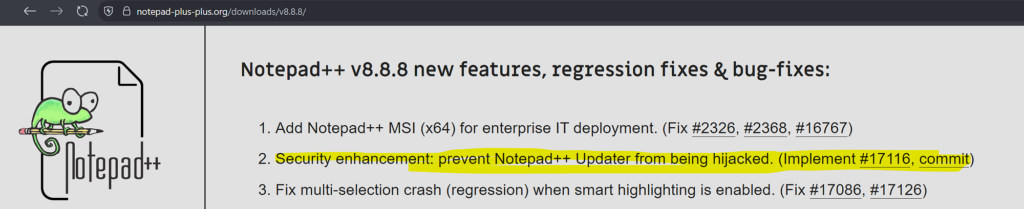
Once the issue was confirmed, Notepad++ acted quickly. The project moved to a new hosting provider and introduced client-side update checks to verify integrity. These steps reduce the risk of future update hijacking and improve overall supply chain security.
The incident also involved close cooperation between Notepad++, external security experts, and the hosting provider. Their joint investigation helped clarify the scope of the attack and confirmed that other customers on the same server were not affected.
Why This Matters for Software Security
This attack is a reminder that even trusted and widely used software can become a target through third-party infrastructure. Developers and organizations must look beyond their own code and pay attention to hosting providers, update systems, and access controls.
For users, the lesson is clear. Keeping software updated is important, but update security matters just as much. For the industry, the Notepad++ case highlights the growing risk of supply chain attacks and the need for stronger verification at every step.
Conclusion
The Notepad++ supply chain attack shows how modern cyber threats are becoming more precise and strategic. By targeting infrastructure instead of software code, attackers were able to reach high-value victims without raising early alarms. While Notepad++ has taken strong steps to improve security, this incident serves as a warning for all software projects to strengthen their supply chain defenses before attackers exploit trust again.