
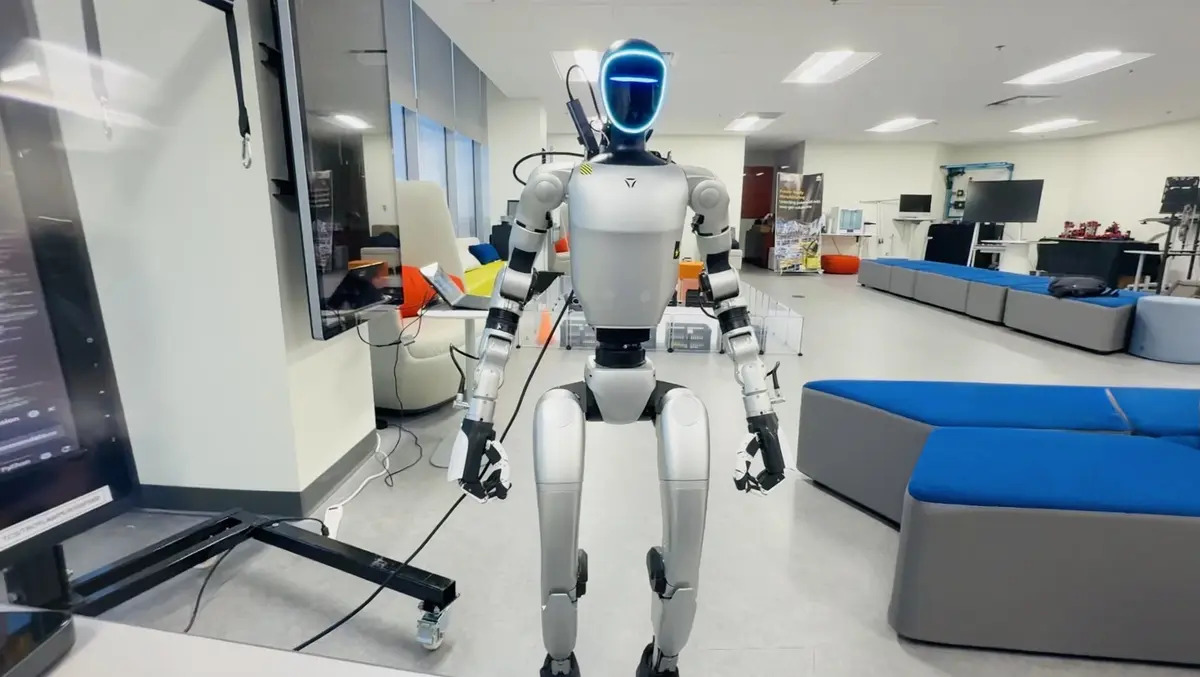
The manufacturing industry is changing quickly with the help of artificial intelligence and digital technologies. To support this transformation, TCS partners with Google Cloud to launch an AI Innovation Centre for Manufacturing. The initiative aims to help companies explore advanced technologies that can make factory operations smarter, faster, and more efficient.
This new centre focuses on building practical AI solutions for manufacturers. Companies will be able to test new ideas, learn how artificial intelligence works in production environments, and scale solutions that improve factory performance.
AI Innovation Centre To Accelerate Digital Manufacturing
The newly launched AI Innovation Centre for Manufacturing is part of the global Gemini Experience Center network created by TCS. The centre provides a collaborative environment where manufacturers can experiment with artificial intelligence tools before implementing them in real factory settings.
The main goal is to help companies adopt digital manufacturing technologies that increase productivity and reduce operational challenges. Businesses will be able to work with experts to design and test intelligent systems for their factories.
Some of the technologies that companies can explore at the centre include:
- Predictive maintenance for machines
- Digital twin technology for factory planning
- Robotics integration for automation
- Intelligent production systems powered by AI
These solutions can help organisations improve equipment performance, reduce downtime, and ensure better product quality.
How The TCS And Google Cloud Partnership Helps Manufacturers
The collaboration brings together the engineering knowledge of TCS and the powerful data and AI capabilities of Google Cloud. This combination allows manufacturers to build advanced solutions that were difficult to implement earlier.
The AI Innovation Centre will support companies at every stage of their digital journey. From early experimentation to full-scale deployment, businesses will have access to tools, experts, and testing environments.
Traditional Manufacturing vs AI-Driven Manufacturing
| Feature | Traditional Manufacturing | AI-Driven Manufacturing |
|---|---|---|
| Machine Maintenance | Fixed schedule checks | Predictive maintenance using data |
| Production Planning | Manual monitoring | Automated decision making |
| Quality Control | Human inspection | AI powered defect detection |
| Efficiency | Limited optimization | Continuous improvement using analytics |
This shift toward AI-driven systems allows manufacturers to respond faster to market demand and improve overall efficiency.
Building Skills For The Future Manufacturing Workforce
Another important benefit of the AI Innovation Centre for Manufacturing is workforce development. As factories adopt advanced technologies, employees need new digital skills to manage AI-based systems.
The centre will help organisations train their workforce and develop capabilities required for modern manufacturing environments. Engineers and factory teams will gain hands-on experience with intelligent tools that are shaping the future of production.
This focus on skills development ensures that companies can successfully adopt smart factory technologies while preparing employees for the next generation of industrial work.
The Future Of Smart Factories
The partnership between TCS and Google Cloud shows how technology companies are supporting the evolution of manufacturing. With access to advanced AI tools, manufacturers can build more resilient and intelligent factories.
Initiatives like this AI Innovation Centre for Manufacturing will play a major role in accelerating digital transformation across the industry. By combining artificial intelligence, data, and automation, businesses can improve productivity, enhance product quality, and create smarter production systems for the future.
As digital manufacturing continues to grow, collaborations between technology providers and industry leaders will help shape the next phase of industrial innovation.