

Meta Description
Heatwave safety tips to help you stay protected during extreme weather. Learn simple ways to avoid heat-related risks and stay safe.
Heatwave Safety Tips Everyone Should Know
Heatwave safety tips are more important than ever as temperatures continue to rise across many parts of the United States. Recent weather patterns show that extreme heat is arriving earlier and lasting longer. In some areas, temperatures have already crossed 100°F (37.7°C), making daily life challenging.
Understanding how to protect yourself during such conditions can help prevent serious health problems.
Why Heatwaves Are Becoming More Dangerous
Heatwaves are not new, but they are becoming stronger and more frequent. Sudden temperature spikes, especially during early spring, can catch people off guard. Many people are not prepared for such extreme conditions, which increases the risk of heat-related illnesses.
Dry conditions and strong winds can also raise the chances of wildfires, making the situation even more dangerous in some regions.
Common Heat-Related Risks
Extreme heat can affect the body quickly. The most common risks include dehydration, heat exhaustion, and heatstroke. These conditions can become serious if not treated on time.
People who spend long hours outdoors, such as workers and hikers, are at higher risk. Children and older adults also need extra care during heatwaves.
Comparison: Safe vs Risky Behavior During Heatwaves
| Activity Type | Safe Behavior | Risky Behavior |
|---|---|---|
| Hydration | Drinking water regularly | Skipping fluids |
| Outdoor Timing | Early morning or evening | Midday exposure |
| Clothing | Light and loose | Tight and dark clothing |
| Physical Activity | Limited and slow | Intense exercise in heat |
Simple Heatwave Safety Tips
Following basic heatwave safety tips can make a big difference. Always drink enough water, even if you do not feel thirsty. Avoid going outside during peak afternoon hours when the sun is strongest.
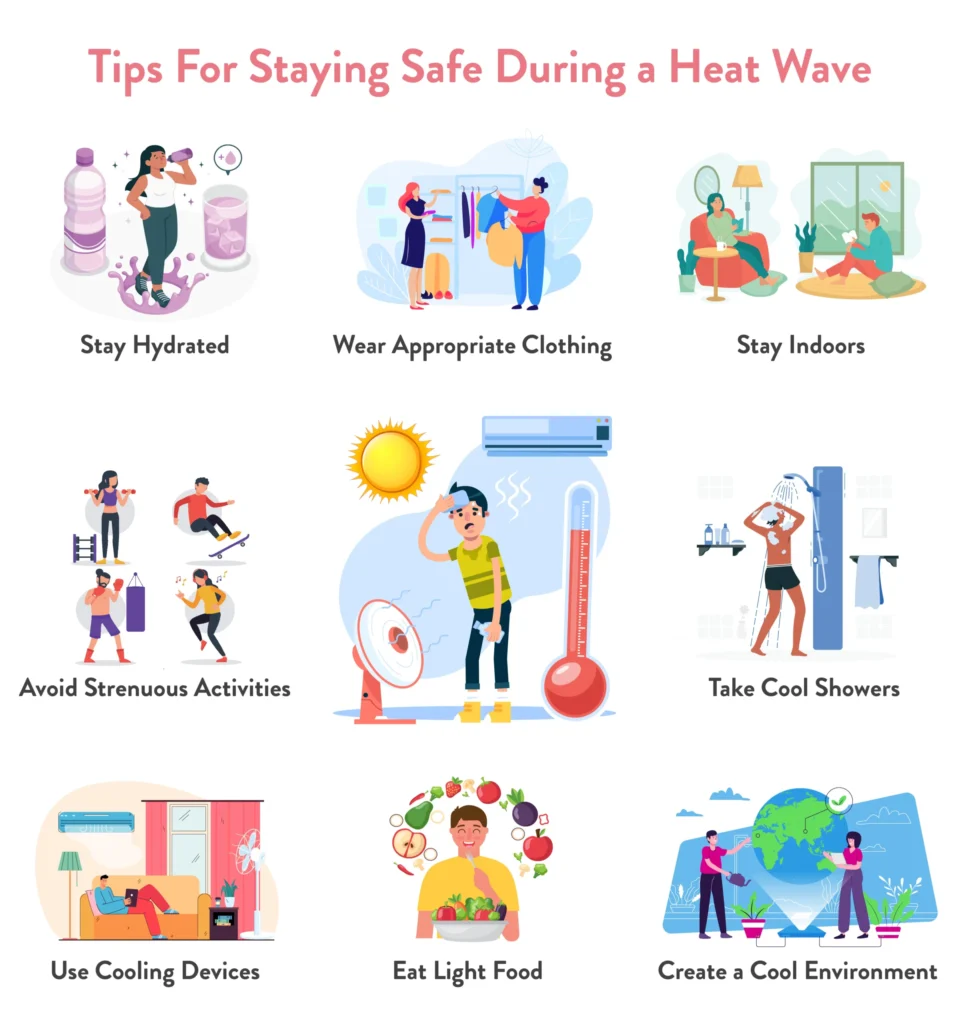
Wear light-colored and loose clothing to keep your body cool. If you need to go outside, try to stay in shaded areas as much as possible.
Using fans or air conditioning can also help maintain a safe indoor temperature. If these are not available, keeping windows open during cooler hours can improve airflow.
What to Do in Emergency Situations
It is important to recognize the signs of heat-related illness. Symptoms like dizziness, headache, heavy sweating, or confusion should not be ignored.
If someone shows signs of heatstroke, such as very high body temperature or loss of consciousness, immediate medical help is needed. While waiting for help, try to cool the person down by moving them to a shaded or cooler place.
How to Plan Ahead
Planning ahead is one of the best heatwave safety tips. Check weather forecasts regularly and adjust your schedule if needed. Keep water, light food, and emergency supplies ready.
If you are traveling or hiking, make sure you know the area well and carry enough water. Avoid taking unnecessary risks during extreme heat conditions.
Final Thoughts
Heatwave safety tips are not just helpful—they are essential in today’s changing climate. As extreme weather becomes more common, being prepared can protect your health and well-being.
By following simple precautions and staying aware, you can reduce risks and stay safe even during the hottest days.