
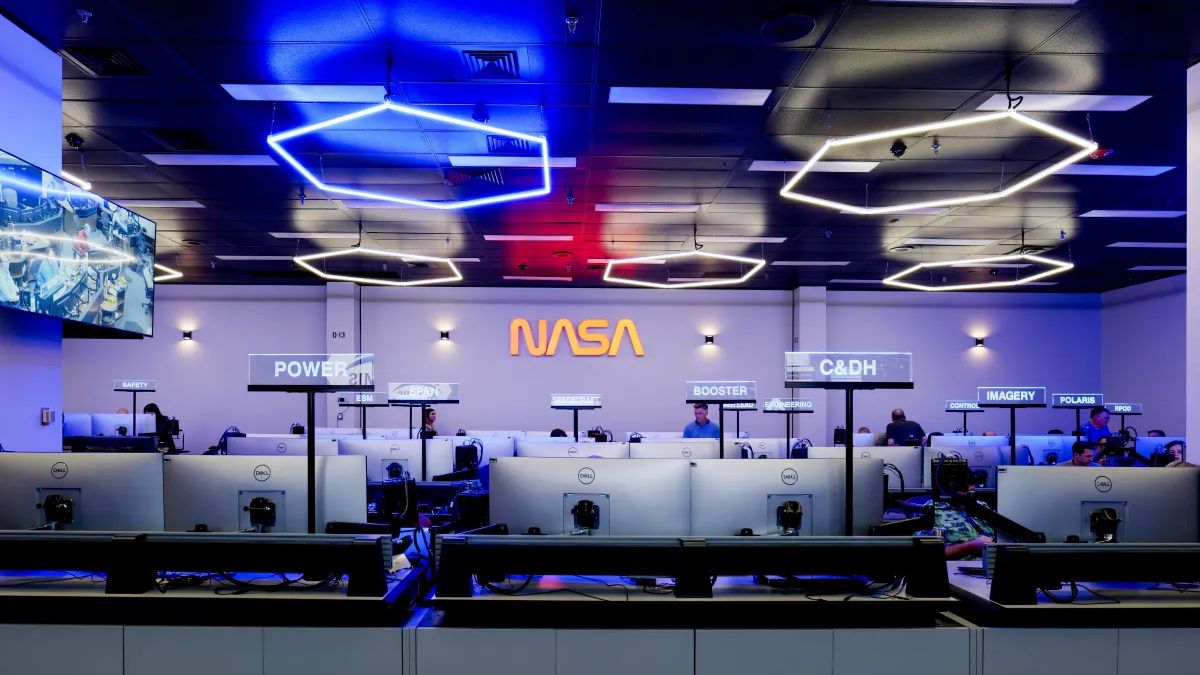
Inside Mission Control: The Brain Behind Artemis II Moon Mission
When we talk about space travel, rockets and astronauts usually take the spotlight. But the real brain behind every mission is mission control. For the upcoming Artemis II, mission control will guide every step from Earth to the Moon and back.
Located in Texas, the Christopher C. Kraft Jr. Mission Control Center is where experts track and manage the mission. This is where decisions are made, problems are solved, and the safety of astronauts is ensured.
From Apollo to Artemis: A Major Shift
Mission control has come a long way since the Apollo Program. While the structure remains similar, the technology and work culture have changed a lot.
| Aspect | Apollo Era | Artemis Era |
|---|---|---|
| Technology | Basic computers and displays | Advanced systems and touchscreens |
| Communication | Limited and delayed | Fast and real-time |
| Workforce | Mostly male engineers | Diverse and inclusive teams |
| Environment | Formal and strict | Flexible and modern |
Even with these changes, the main goal is still the same—complete the mission safely.
How Mission Control Operates Artemis II
The Orion spacecraft will carry astronauts on a journey beyond the Moon. Mission control teams will monitor every detail, including speed, direction, and astronaut health.
Teams work around the clock in shifts. The flight director leads the operation and makes important decisions. Communication with astronauts is carefully managed to avoid confusion.
Lessons from missions like Apollo 13 have shaped how teams respond to emergencies today. Every situation is planned and practiced before the mission even begins.
The Experts Behind the Screens
Mission control is supported by multiple teams. One key group works in the Mission Evaluation Room. These engineers understand the spacecraft in detail because they helped design it.
They focus on solving problems and making sure every system works as expected. Their role becomes critical if anything goes wrong during the mission.
The Most Important Call
A major moment in Artemis II happens early in the mission. After orbiting Earth, the team must decide whether to send the spacecraft toward the Moon. This step is complex and requires complete confidence in the system.
Once the spacecraft begins its journey to the Moon, there are very limited options to return quickly. This makes the decision extremely important.
Challenges and Risks
Space missions always come with risks. During re-entry, the spacecraft will face extreme heat and speed. Even small issues can become serious problems.
Past events like the Space Shuttle Columbia disaster remind us how important careful monitoring is. Mission control teams prepare for these risks through detailed simulations and training.
Why Mission Control Is the True Brain
Even with advanced automation, human judgment is still key. Mission control teams train for months, running simulations where multiple failures happen at once. This prepares them for real situations.
Mission control is not just a support system—it is the brain that keeps everything working together. Without it, space missions like Artemis II would not be possible.
Conclusion
As Artemis II prepares to take humans farther into space, mission control will remain at the center of the action. From launch to landing, every move depends on the people behind the screens.
They may not be visible to the world, but their role is critical. Mission control truly is the brain behind the Artemis II Moon mission.